I stopped making parish bulletins once. It was during the COVID pandemic, when public Masses were suspended, that I made the call. A bulletin reflects the happenings and offerings of a parish, and when a parish isn’t gathering publicly, most of its reason to exist goes with it.
When we were finally able to gather again, I experimented with the idea of just not bringing the bulletin back, replacing it instead with Mass announcements and directing parishioners to the website for further details. It didn’t last. The outcry was immediate, and I promptly brought the printed bulletin back. I’ve since come to think that, for a fair number of my own people, the parish’s return wasn’t complete until the bulletin returned with it.
That kind of loyalty is worth taking seriously, and so is the question of whether the thing people are loyal to still does its job. This fall brought an extra reason to ask: Microsoft retired the program many parish offices built their bulletins in.
Biblical Bulletins
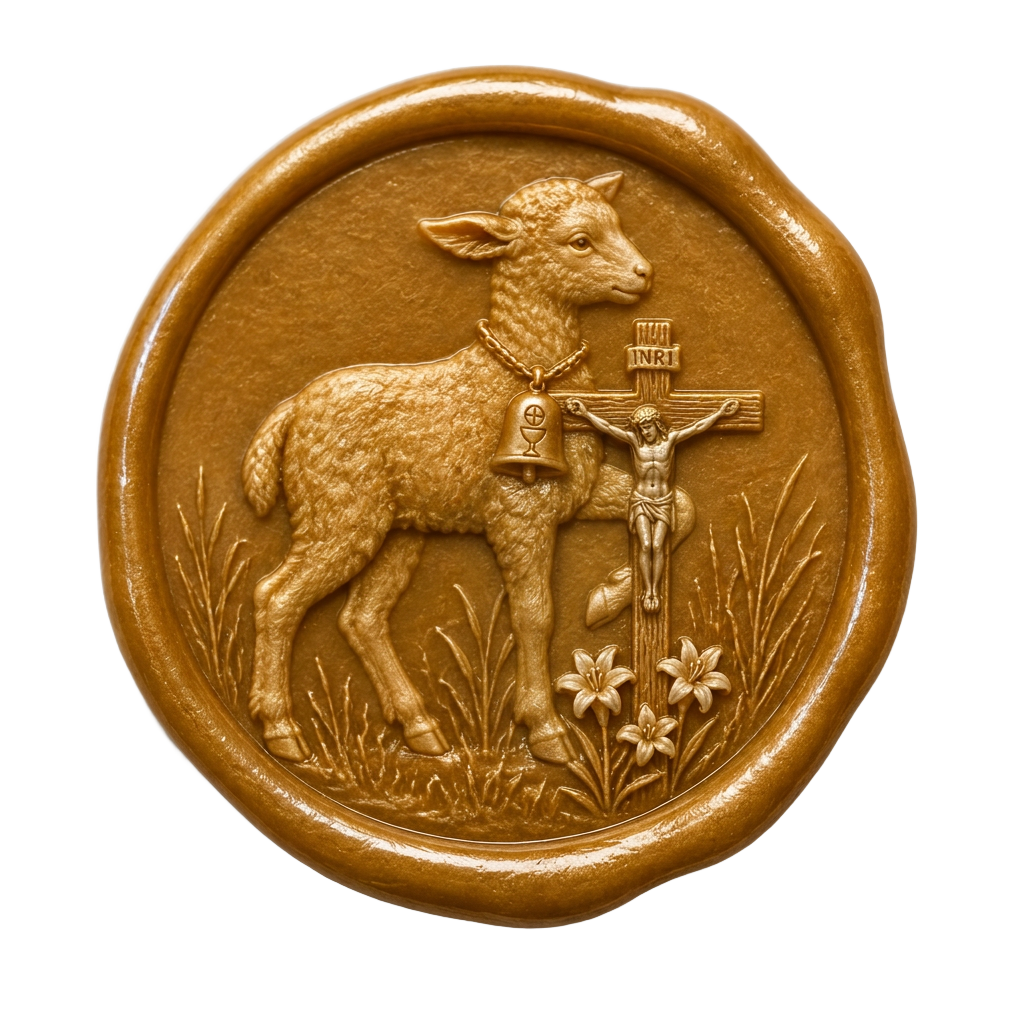
The instinct behind that outcry is older than it looks. A bit of trivia: bulletins and papal bulls (solemn letters from the pope) share the Latin root bulla, a round object that came to mean the metal seal attached to official documents. “Bulletin” comes from a diminutive of it: literally, a “little seal.”
We hear Old Testament versions of official decrees in Ezra and Nehemiah. Centuries before the birth of Christ, Cyrus of Persia freed Jewish exiles who had not been in Jerusalem for decades, allowing them to return and rebuild the Temple. He didn’t just permit it and let word travel however it traveled. Much as a good bulletin and the Mass announcements work together, he had it proclaimed “throughout his entire kingdom, both by word of mouth and in writing” (Ezr 1:1).
This kind of thing would happen again under Darius, and later still under Artaxerxes. Three kings, across the better part of a century, landed on the same instinct: a decision that affects a community has to be committed to writing, because the writing is what travels intact.
The New Testament continues this tradition. In Acts 15, the apostles and presbyters don’t just let their decision over a great controversy travel however it will; they write it down and send trusted people to deliver it in person: “Then the apostles and presbyters, in agreement with the whole church, decided to choose representatives and to send them to Antioch with Paul and Barnabas” (Acts 15:22), so the message arrives “by word of mouth” from someone the community can vouch for (Acts 15:27).
Paul, whose letters came up last issue for how they got written, cared just as much about how they got heard. Writing to the Thessalonians, he solemnly charges the whole church to have the letter read aloud: “I adjure you by the Lord that this letter be read to all the brothers” (1 Thess 5:27). Writing to the Colossians, he arranges cross-parish circulation, a coordination problem any multi-site administrator would recognize: “have it read also in the church of the Laodiceans, and you yourselves read the one from Laodicea” (Col 4:16).
These letters were written to be heard by the whole church together. Twenty centuries on, a bulletin and the announcements that go with it still have the same job: one message, reaching everyone.
The Bulletin Today
Opinions about the bulletin today vary, but one that can’t hold up to scrutiny is that it’s never read. That theory is wrong, and not by a little. Georgetown’s CARA Center ran an actual survey on this in 2023, not a guess: 61% of U.S. Catholics said they’d read their parish bulletin in the past three months, and among Catholics who attend Mass weekly, that number climbs to 90%, well ahead of the parish website.
Whatever else is true about the bulletin, “nobody reads it” isn’t the problem. The problem is what happens once they do.
The sharper diagnosis comes from Matthew Warner, the founder of the parish-communication platform Flocknote, writing in the National Catholic Register back in 2011. His argument is that bulletins don’t start out unreadable; they get that way gradually, through what amounts to scope creep—one more announcement, one more reminder, one more thing somebody asked to have “just mentioned,” until the thing a newcomer or a homebound parishioner is trying to actually use has been buried under everything else. The complaint hasn’t aged: in 2020, America magazine was still observing that “so many bulletins are overcrowded,” and likened reading one to opening someone’s junk drawer.
His prescription is blunt: a bulletin has to choose between being comprehensive and being concise, because it can’t be both, and most parishes never actually make that choice on purpose. None of that is an argument against including things. It’s an argument for deciding, on purpose, what goes on the front page and what doesn’t.
So how do you begin to curate your bulletin with intention?
Getting the Basics Right
The specific advice varies by source (Angelo Jesus Canta’s ten-point checklist in that same America piece is one of the better ones), but it converges on a short list that any parish office could apply this week, with one urgent exception noted below:
Put the load-bearing information first: Mass and confession times, the parish’s own phone number and office hours, and anything genuinely time-sensitive belong on the front page; everything else can move to the back.
Group like with like: all the Mass times together, all the ministry announcements together, all the ads together—not interleaved in whatever order they arrived in someone’s inbox.
Limit the type: two typefaces, maybe three if one is reserved for headers, and left-aligned body text; a bulletin is not the place to discover a new font.
Let size and placement do the sorting: a reader should be able to tell what matters most by glancing at the page, not by reading every line at equal weight.
Leave the page room to breathe: generous margins and real white space aren’t wasted space; they’re what makes the important lines findable.
Treat it like real parish work: several dioceses now list bulletin or communications editor as its own defined role rather than something handed to whoever’s desk is closest to the deadline, which is itself a quiet admission of how much craft this actually takes.
The urgent exception: for a lot of parishes, new software is no longer optional. Microsoft has retired Publisher, the program many parish offices have quietly built decades of bulletins in. Microsoft 365 subscribers lost access to it after October 1, 2026, with support for the standalone Publisher 2021 and Office LTSC 2021 versions having ended less than two weeks afterward.
One common landing spot is Canva, and at least one vendor now sells tools built specifically to convert old .pub bulletin files for it. But treat this as more than a file conversion. A migration forced on you is a natural moment to actually apply the fundamentals above, rather than just rebuilding the same crowded template, junk drawer and all, in a new program.
The Legal Floor
None of this happens in a vacuum, and a parish putting a bulletin together is operating inside real constraints, some canonical and some simply current:
Financial transparency is a canonical requirement, not just good practice. Canon law requires whoever administers the parish’s goods, ordinarily the pastor, to give the faithful an accounting of what they’ve offered the Church, in whatever form the diocese’s particular law sets; a straightforward annual or periodic financial summary in the bulletin is one common way to do that, where those norms allow it (canon 1287 §2).
Election season brings a live regulatory limit, not just a historical one. The bishops’ conference’s Political Activity and Lobbying Guidelines for Catholic Organizations (2024) treat a parish’s official publications, the bulletin included, as the parish itself speaking, so no candidate endorsements, no opposition statements, and no partisan voter materials.
That guidance doesn’t depend on how the courts settle the federal tax rule. When the IRS signaled in 2025 that it might loosen that rule, the bishops’ conference answered that the Church still doesn’t endorse or oppose candidates. A bulletin can encourage participation and lay out the moral stakes of an issue without ever touching who’s on the ballot. Several state Catholic conferences publish their own versions of the same guidance for parishes that want the specifics in writing.
Beyond that legal floor, a few habits seem to separate a bulletin that actually gets read from one that quietly becomes wallpaper:
Pair print with digital, rather than choosing between them. In most parishes, habits still split by attendance: weekly Mass-goers tend to lean print, while occasional attendees who engage at all tend to lean digital—which argues for both, not either.
Keep the financial reporting specific rather than vague. The bulletins that name real numbers—this week’s collection against the weekly goal, not just “thank you for your generosity”—are the ones actually fulfilling the spirit of canon 1287, not merely gesturing at it.
Build in a real edit cycle. A two-week submission window, a single person with final sign-off, and a habit of asking what can be cut rather than only what can be added will do more for readability than any redesign.
Let the front page work like a magazine cover. A headline, or maybe a carefully curated image, not a table of contents. One short line that points to something worth reading will do more than a dense block trying to say everything at once.
Those are the mechanics: the design fundamentals, regulations, and habits that separate a bulletin that works from one that doesn’t.
The Word Itself
Yet none of them, on their own, explain why the practice survived from a Persian court to whatever’s sitting in the pew racks this Sunday, which brings us back to where this started. Nobody printing the week’s Mass times is thinking about a chancery seal.
But the word bulletin itself remembers the seal (the bulla), and the practice behind it remembers what the parish office sometimes forgets: a bulletin, however humble, belongs to the same family as a royal decree proclaimed across the Persian Empire, a letter carried by hand to Antioch, an epistle Paul solemnly charged a church to read aloud. Something the whole community needs to hear, set down in a form sturdy enough to travel and still be believed once it arrives.
None of this requires new software, a bigger budget, or a professional designer, though any of those would help, and for the Publisher parishes, one of those wasn’t optional. It mostly requires treating the bulletin the way its own name already does, without anyone quite noticing: a small seal on real news for real people, owed the same care as anything else the parish puts its name on.
I think about that when I remember what happened in my own parish when the bulletin disappeared for a season and came back to an outcry I hadn’t expected, and I think about it again whenever I remember that nine in ten weekly Mass-goers read it. That’s not a small audience to get wrong, and it’s not such a small seal to be putting on something every week.